If your tooth is decaying it must be treated as soon as possible to avoid any further problems. Fillings are needed to restore chewing ability and aesthetic reasons as well. The later you get your tooth treated the bigger problem and more possible pain you have to face. Little decays can be treated by white composite fillings but bigger decays are rather treated by inlays and onlays depending on the recommendation of the dentist.
In both cases the decaying part of the teeth is removed by a driller and the the hole is filled either by filling or inlays. The whole intervention is performed in local anesthesia, so it is painless. Fillings and inlays/onlays are both white so they look like your natural teeth. Fillings are made of composite and inlays/onlays can be composite, ceramic or pressed ceramic. They are all white matching your teeth colors. Check out our price list here.
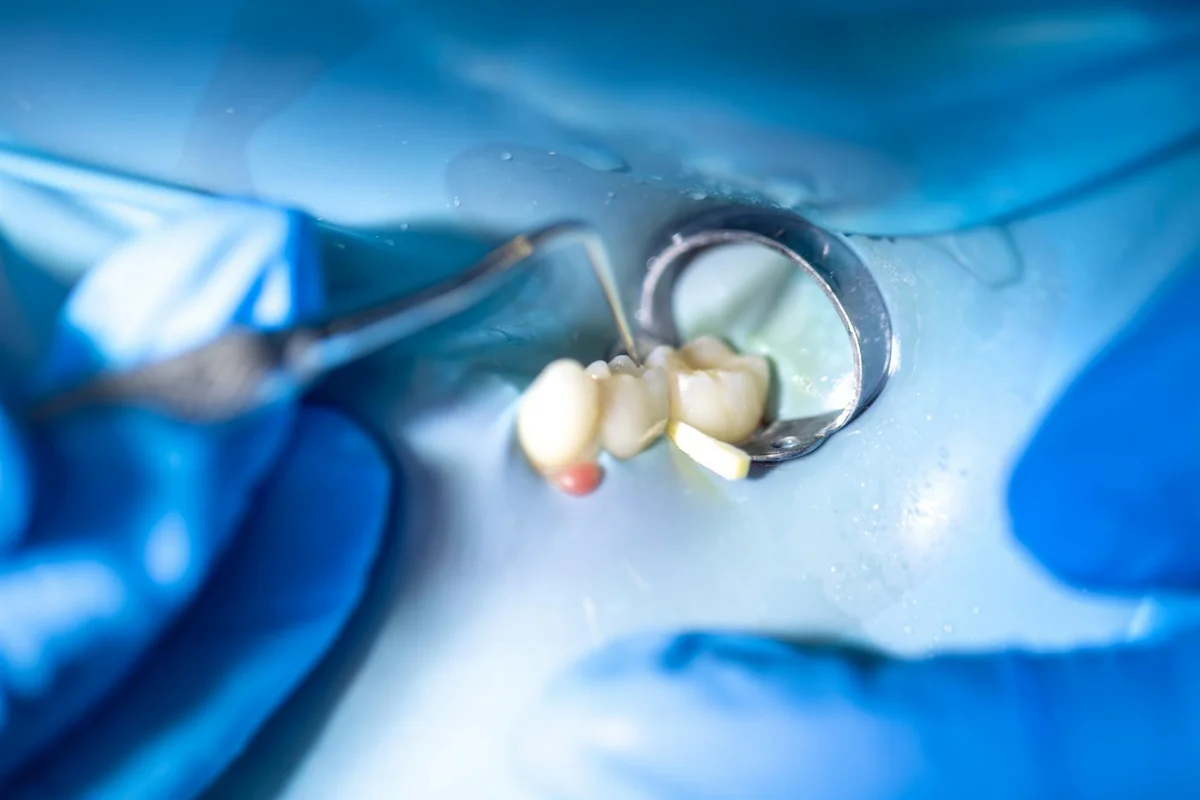
Filling: in case of smaller decays
Inlay:
Filling: preparing cavity is performed by a high speed micro motor, while the removing of decayed area is carried out by low speed micro motor. Subsequently, the anatomic shape of tooth is restored tooth-colored and aesthetic filling material. The intervention is implemented with using a so-called rubber dam isolating set, which consists of rubber sheet and fixing clamps that is a useful and inevitable condition for the successful filling as it provides maximal overview and security and adequate sterile conditions for the intervention. Teeth are seized through holes on rubber sheet. Sheet is fixed on the tooth neck by clamp and remains outside of mouth with utilizing a frame. Treatment requires the simultaneous isolation of numerous teeth. Height is checked upon performing filling, and filling is to be polished by rubber polish and polish paste.
Inlay and onlay: Subsequent to removal of old filling and cleaning of decayed area, special cavity preparation is performed. In various cases, the cusp needs to be removed as it is a part lacking supporter and might brake off due to occlusal force (in case of root-treated tooth, teeth are covered with onlay including cusps). The so-called undermined walls of cavity shall be filled with composite or glass ionomer material and then an impression of tooth is made. Impression-making is performed with silicon based impression material: impression tray is filled and then placed to dental arch with pressing. The antagonist impression-making, namely the impression of the opposite arch of the treated arch is required for dental technician work. In such case, alginate impression material is used most commonly.
Material used:
Filling material: compound filling material
inlay/onlay material:
Temporary Treatment
Inlay: A temporary inlay/onlay is placed in prepared cavity that provides aesthetic solution and chewing function until finishing dental technician work. A more simple solution is the utilization of the so-called temporary filling that hardens with light.
Handing over:
Inlays: inlays/onlays are fixed in teeth in a couple of days. Prior to attaching inlays/onlays, cavity shall be disinfected by ozone therapy as it provides germ-free cavity. Attaching is carried out under local anesthesia in so- called rubber dam isolation (a rubber sheet is fixed on treated tooth by using a clamp to keep away saliva and blood). The possible height correction is carried out after attaching.


This website is protected by reCAPTCHA, and is subject to the Google Privacy Policy and Terms of Service.
created by Attila Varga